Details
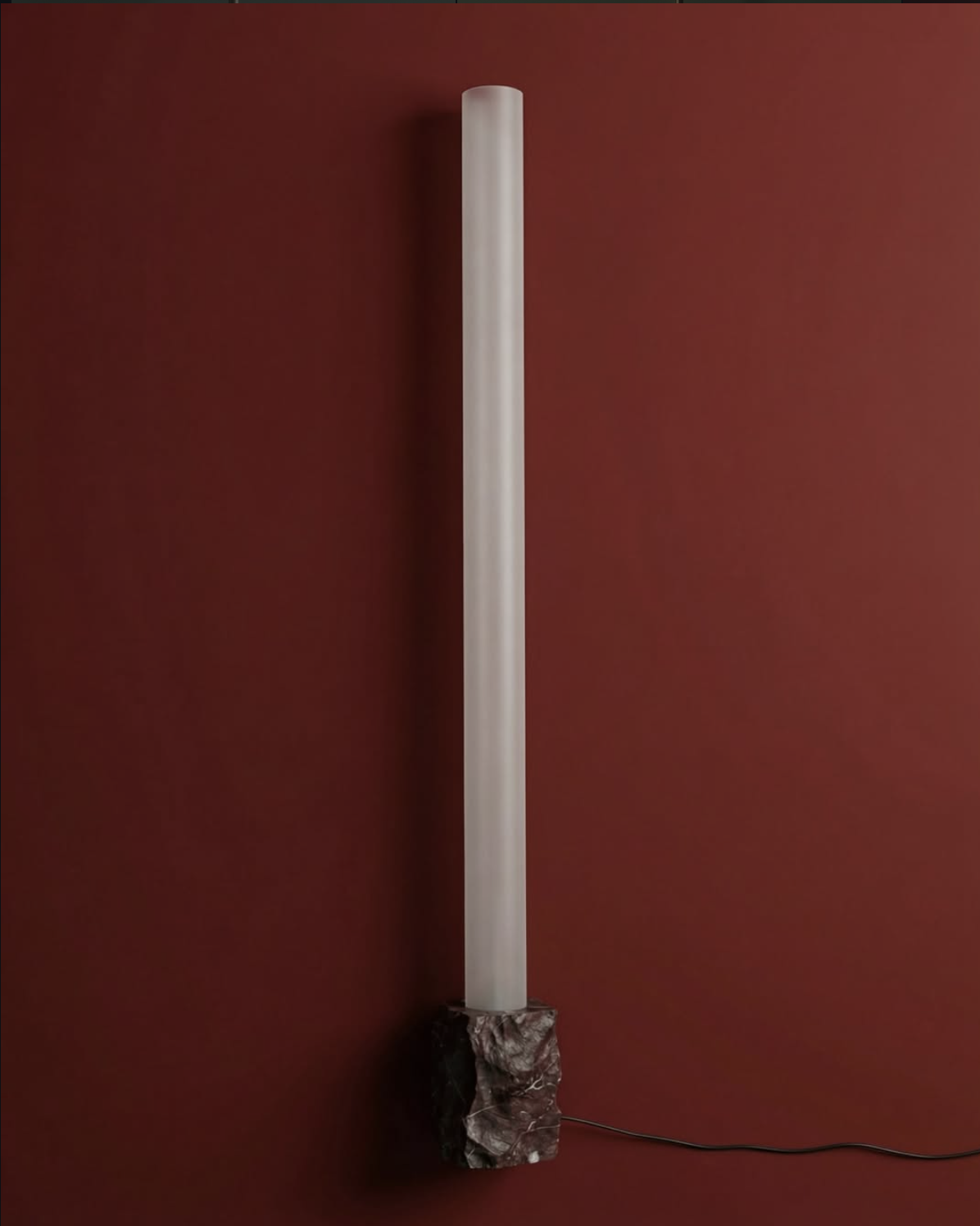
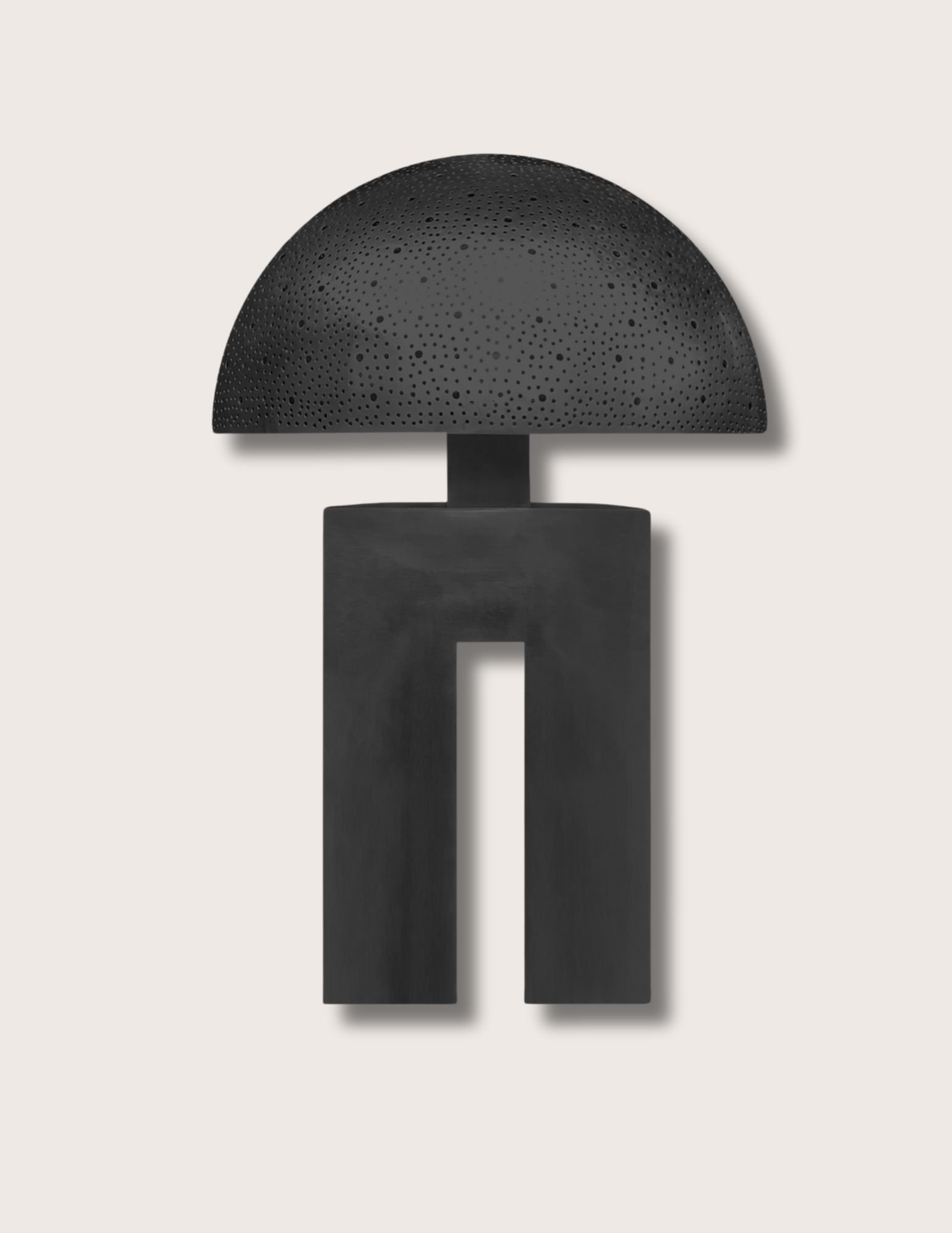
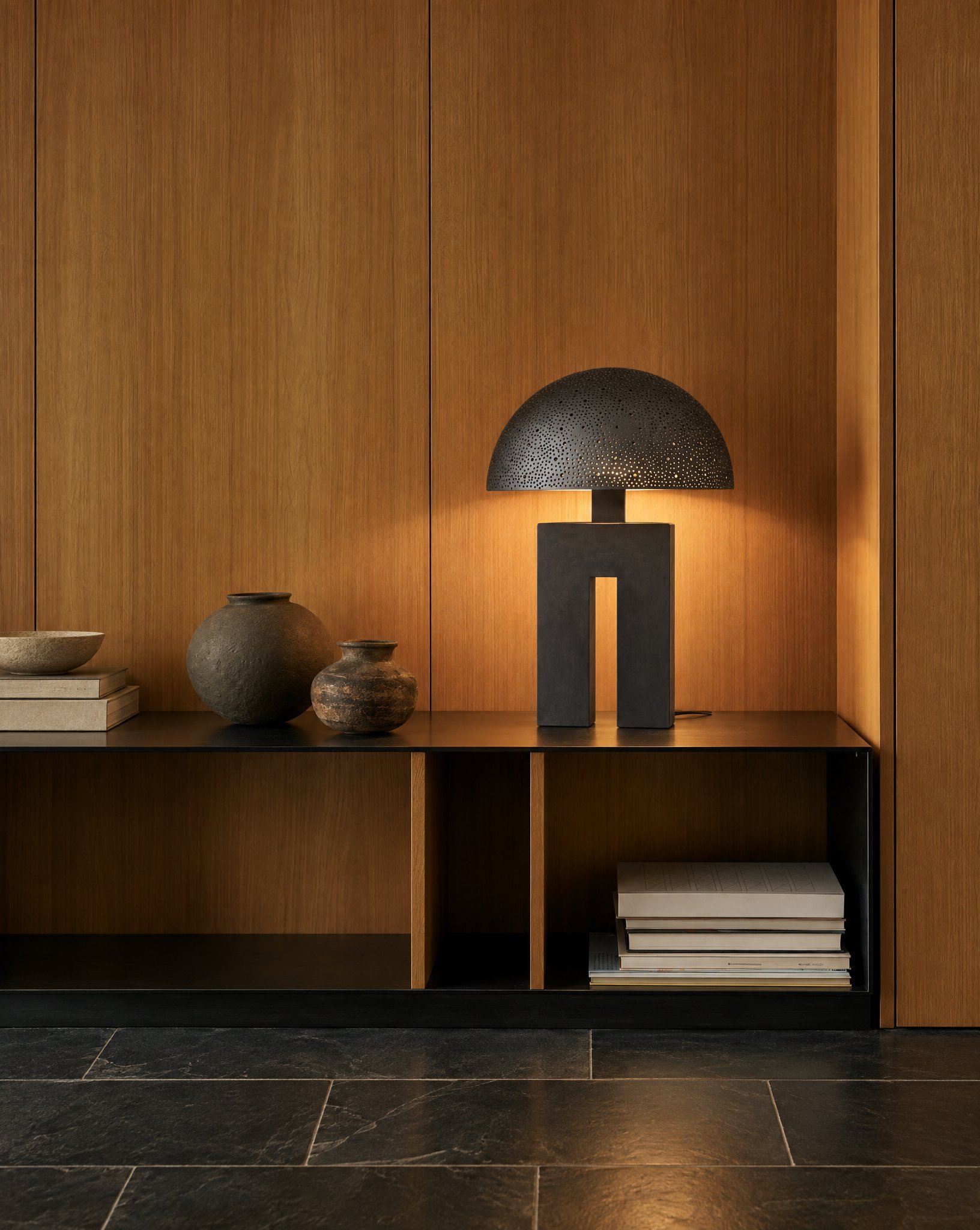
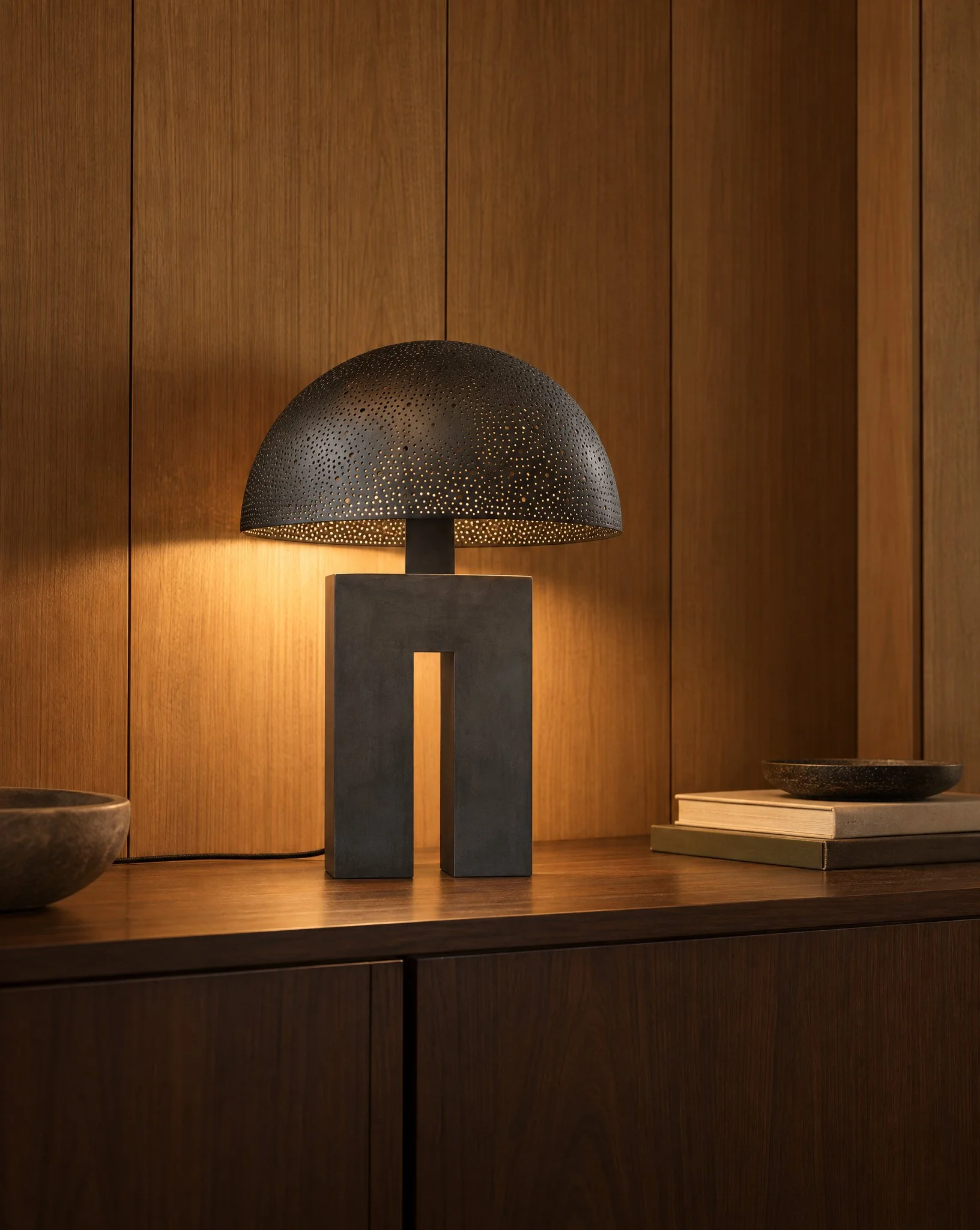
The Douglass Rosso Levanto Glass Floor Lamp stands as a dialogue between raw and refined and a metaphor for the activism and advocacy of its namesake. Inspired by Frederick Douglass' 1887 visit to Egypt, the piece, handcrafted by Egyptian artisans, features a slender glass column arising from a solid piece of natural stone. The design allows light to emerge softly from within, rising through the transparent form like a quiet ascent from ground to glow. The stone base, a Rosso Levanto marble is a deep and luxurious, wine-red color, highlighted by striking veins of white and cream. Illumination rising to fill a space with beautiful natural stone and soft warm light, the Douglass Rosso Levanto Glass Floor Lamp is the perfect finishing touch your room has been waiting for. Make it the latest addition to your story of home.
Editors' Note
The Douglass Collection is named in honor of the orator, activist and icon of 19th century America, Frederick Douglass. Inspired by his 1887 visit to Egypt where the 69-year-old activist climbed the Great Pyramid of Khufu at Giza, this collection features artisan pieces crafted from stone and metal natural to the country. Born Frederick Augustus Washington Bailey, a child enslaved on Holme Hill Farm in Talbot county, Maryland, Douglass was raised by his maternal grandmother. Throughout his life he remained unsure of his actual birthdate, placing 1817 as his best estimate. For the day, he chose February 14th, remembering that his mother, Harriet Bailey, liked to call him her little Valentine. Douglass’ education would begin when he was eight, starting with lessons from Sophia Auld. The short-lived lessons, which ended abruptly once Sophia’s husband became aware of them, were enough to spark a lifelong fascination with knowledge. Continuing to learn in secret — as literacy was illegal for people enslaved in Maryland at that time — Douglass would exchange food for lessons with poor white boys in the area. Between 1826 and 1838, he continued to change hands, whether through inheritance or hiring, becoming a skilled craftsman earning a salary for his work at shipyards, and meeting his eventual wife, Anna Murray, a forewoman of color. Douglass made his escape in 1838. Disguised as a sailor, he escaped Maryland via train and steamboat, eventually arriving in New York City. There he met the Black abolitionist, David Ruggles, who helped relocate Douglass and Anna — then married — to New Bedford, Massachusetts. It was there that Frederick chose the last name, “Douglass,” having traveled since his escape under the alias, “Frederick Johnson.” It was also in New Bedford that Douglass would begin his career as an orator, inspired at first by his frequent readings of The Liberator, a newspaper published by abolitionist, William Lloyd Garrison. In 1841, one of his speeches in New Bedford was attended by banker William C. Coffin, who invited him to speak at a convention of the Anti-Slavery Society being held in Nantucket that year. The success of the speech began his work with both the Anti-Slavery and the American Anti-Slavery Societies, and by 1845 he had published the first of his three autobiographies. The second, My Bondage and My Freedom, was published in 1855, while the third, Life and Times of Frederick Douglass was, released in 1881. The North Star, which after an 1851 merger with The Liberty Party Paper, circulated as Frederick Douglass’ Paper, until 1860. He would later found Douglass’ Monthly, which ran from 1859 – 1863, and New National Era, which circulated between 1870 and 1874. An early master of what would later come to be known as branding, Douglass made full use of his popularity and worked strategically to bolster it. This included the iconic hairstyle that he cultivated throughout his life, and his embrace of photography as a means to transform the narrative around Black people, often using his own incredible successes as a model. As a result, he is recorded as the single most photographed American of the 19th century, and among the most photographed in the world for his time.
Details
The Douglass Rosso Levanto Glass Floor Lamp stands as a dialogue between raw and refined and a metaphor for the activism and advocacy of its namesake. Inspired by Frederick Douglass' 1887 visit to Egypt, the piece, handcrafted by Egyptian artisans, features a slender glass column arising from a solid piece of natural stone. The design allows light to emerge softly from within, rising through the transparent form like a quiet ascent from ground to glow. The stone base, a Rosso Levanto marble is a deep and luxurious, wine-red color, highlighted by striking veins of white and cream. Illumination rising to fill a space with beautiful natural stone and soft warm light, the Douglass Rosso Levanto Glass Floor Lamp is the perfect finishing touch your room has been waiting for. Make it the latest addition to your story of home.
Editors' Note
The Douglass Collection is named in honor of the orator, activist and icon of 19th century America, Frederick Douglass. Inspired by his 1887 visit to Egypt where the 69-year-old activist climbed the Great Pyramid of Khufu at Giza, this collection features artisan pieces crafted from stone and metal natural to the country. Born Frederick Augustus Washington Bailey, a child enslaved on Holme Hill Farm in Talbot county, Maryland, Douglass was raised by his maternal grandmother. Throughout his life he remained unsure of his actual birthdate, placing 1817 as his best estimate. For the day, he chose February 14th, remembering that his mother, Harriet Bailey, liked to call him her little Valentine. Douglass’ education would begin when he was eight, starting with lessons from Sophia Auld. The short-lived lessons, which ended abruptly once Sophia’s husband became aware of them, were enough to spark a lifelong fascination with knowledge. Continuing to learn in secret — as literacy was illegal for people enslaved in Maryland at that time — Douglass would exchange food for lessons with poor white boys in the area. Between 1826 and 1838, he continued to change hands, whether through inheritance or hiring, becoming a skilled craftsman earning a salary for his work at shipyards, and meeting his eventual wife, Anna Murray, a forewoman of color. Douglass made his escape in 1838. Disguised as a sailor, he escaped Maryland via train and steamboat, eventually arriving in New York City. There he met the Black abolitionist, David Ruggles, who helped relocate Douglass and Anna — then married — to New Bedford, Massachusetts. It was there that Frederick chose the last name, “Douglass,” having traveled since his escape under the alias, “Frederick Johnson.” It was also in New Bedford that Douglass would begin his career as an orator, inspired at first by his frequent readings of The Liberator, a newspaper published by abolitionist, William Lloyd Garrison. In 1841, one of his speeches in New Bedford was attended by banker William C. Coffin, who invited him to speak at a convention of the Anti-Slavery Society being held in Nantucket that year. The success of the speech began his work with both the Anti-Slavery and the American Anti-Slavery Societies, and by 1845 he had published the first of his three autobiographies. The second, My Bondage and My Freedom, was published in 1855, while the third, Life and Times of Frederick Douglass was, released in 1881. The North Star, which after an 1851 merger with The Liberty Party Paper, circulated as Frederick Douglass’ Paper, until 1860. He would later found Douglass’ Monthly, which ran from 1859 – 1863, and New National Era, which circulated between 1870 and 1874. An early master of what would later come to be known as branding, Douglass made full use of his popularity and worked strategically to bolster it. This included the iconic hairstyle that he cultivated throughout his life, and his embrace of photography as a means to transform the narrative around Black people, often using his own incredible successes as a model. As a result, he is recorded as the single most photographed American of the 19th century, and among the most photographed in the world for his time.

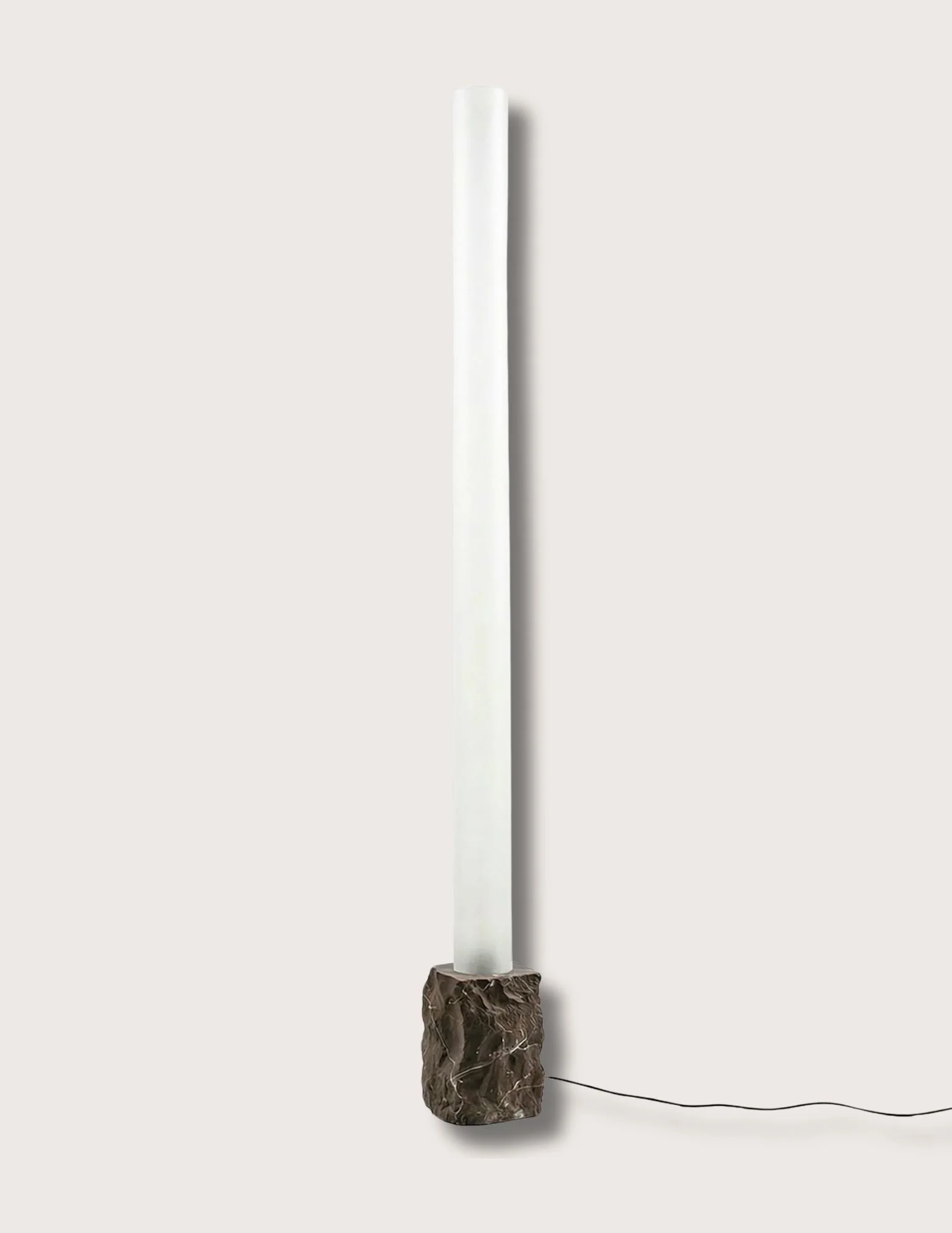 Image 1 of 3
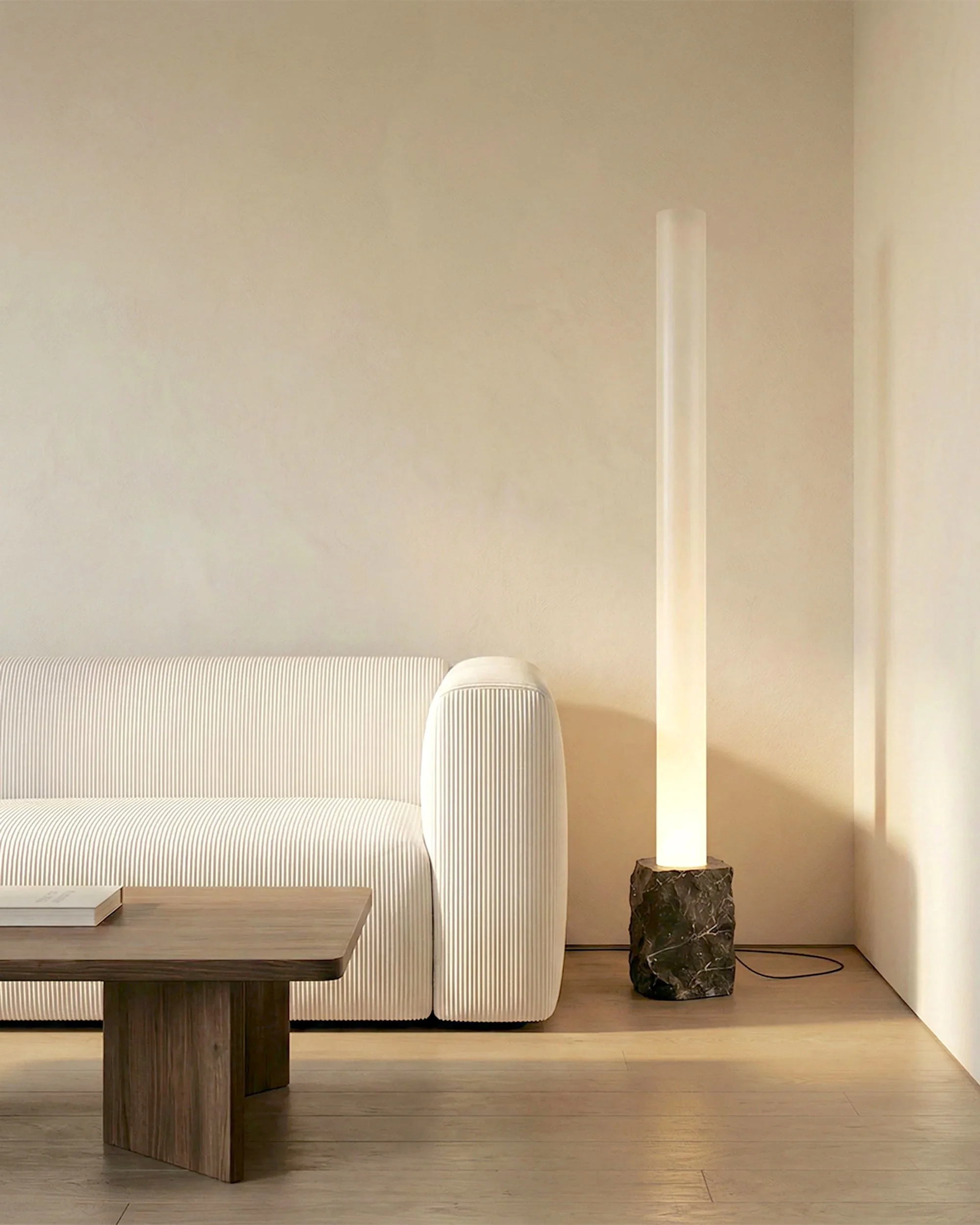 Image 2 of 3
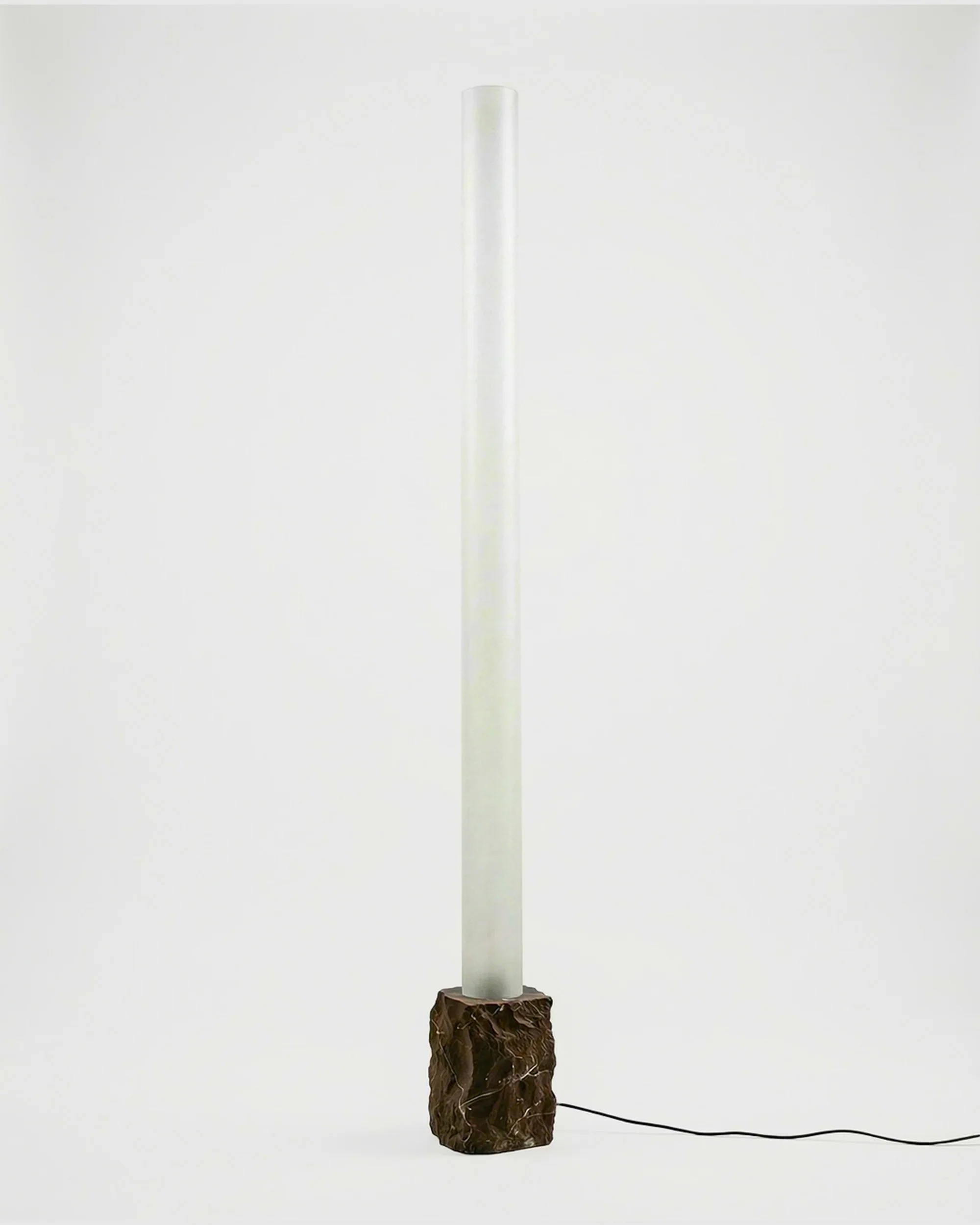 Image 3 of 3