Details
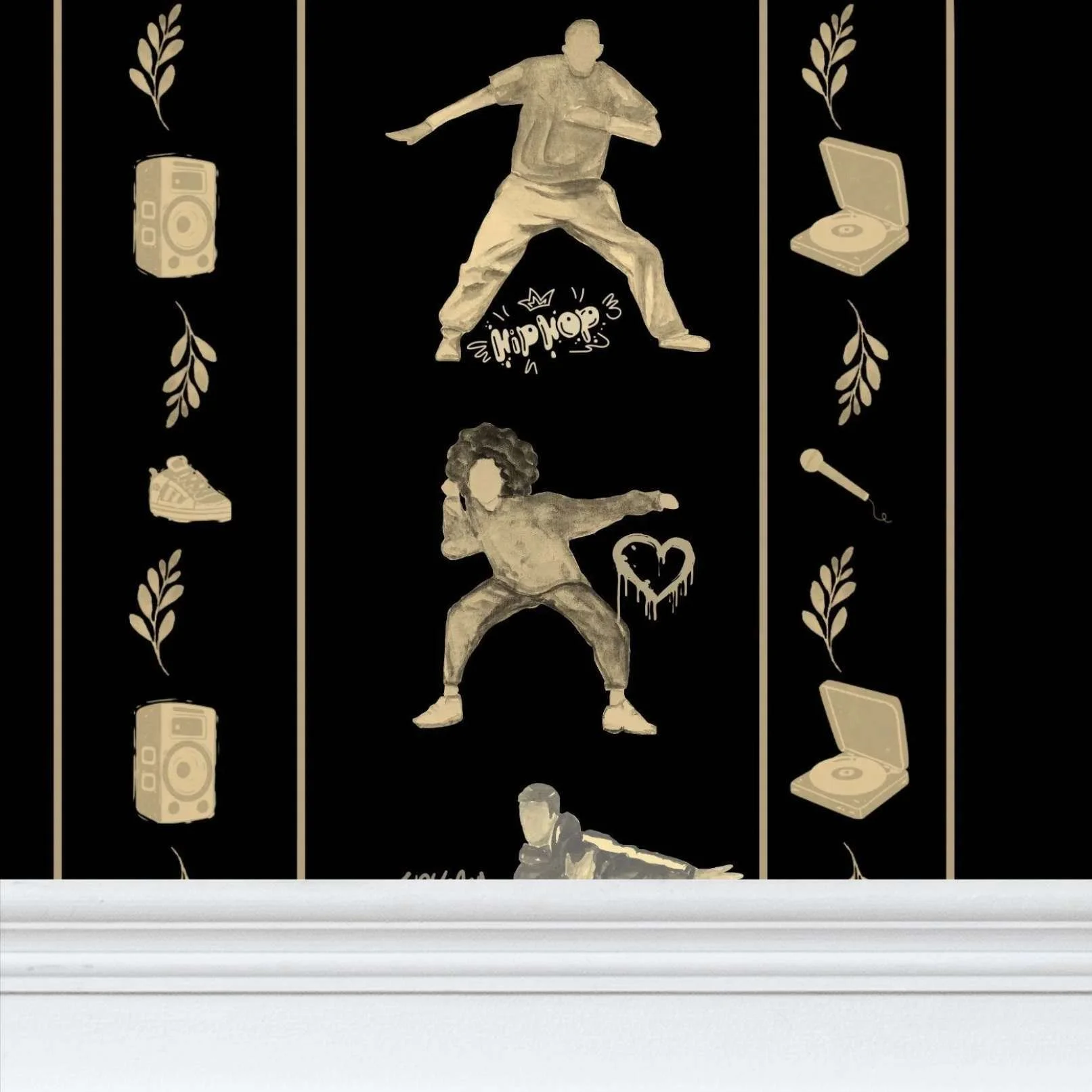
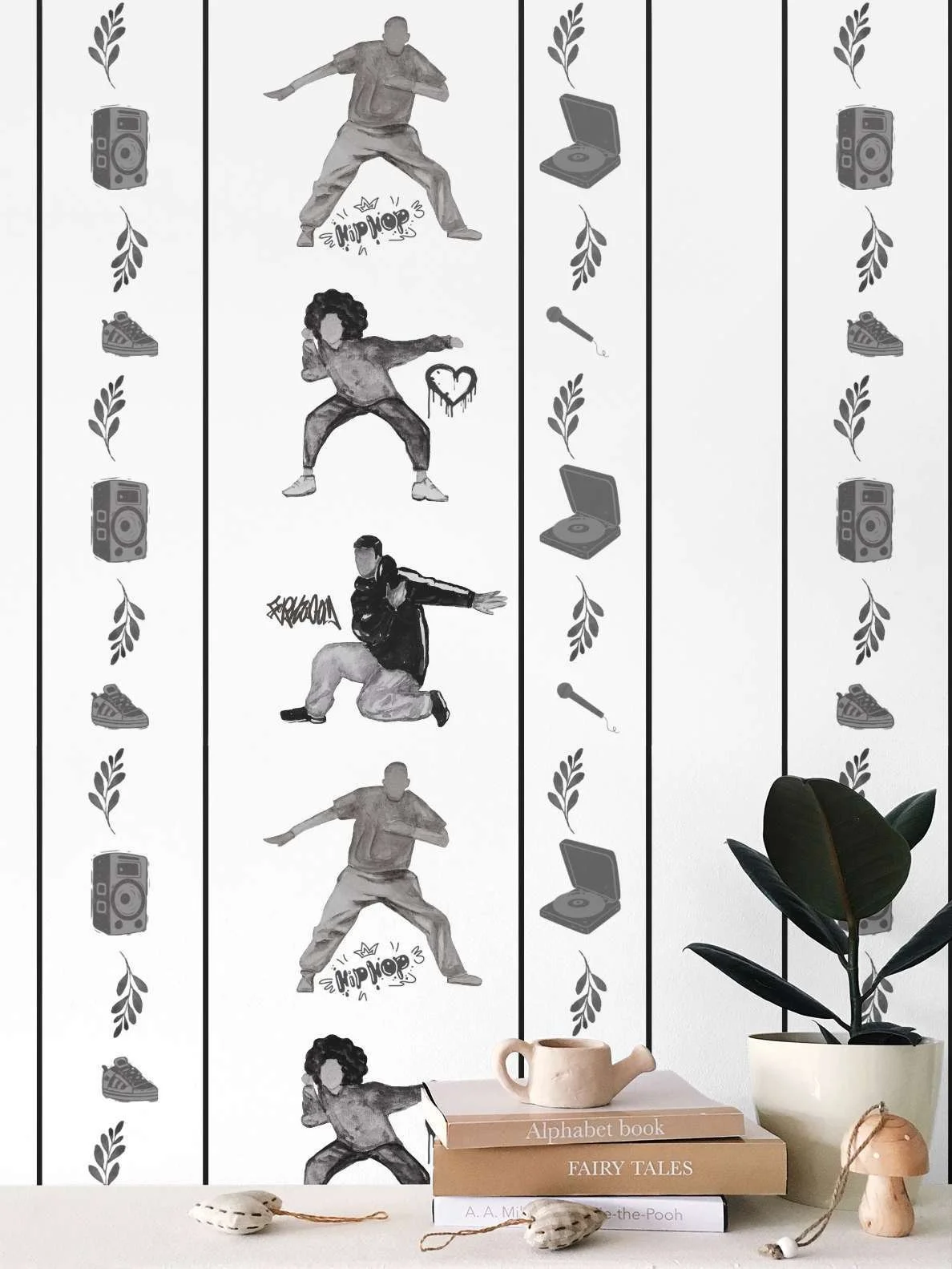
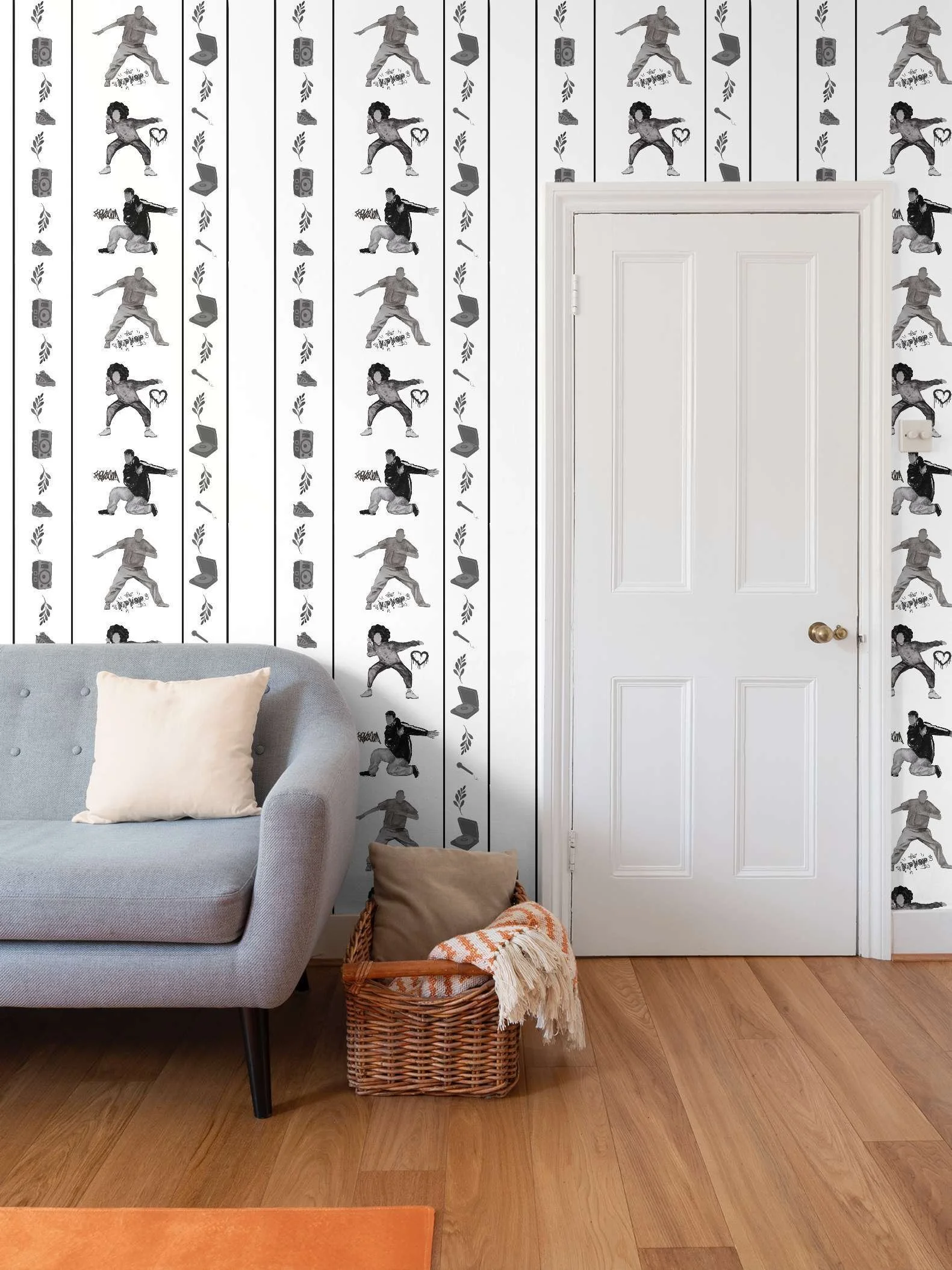
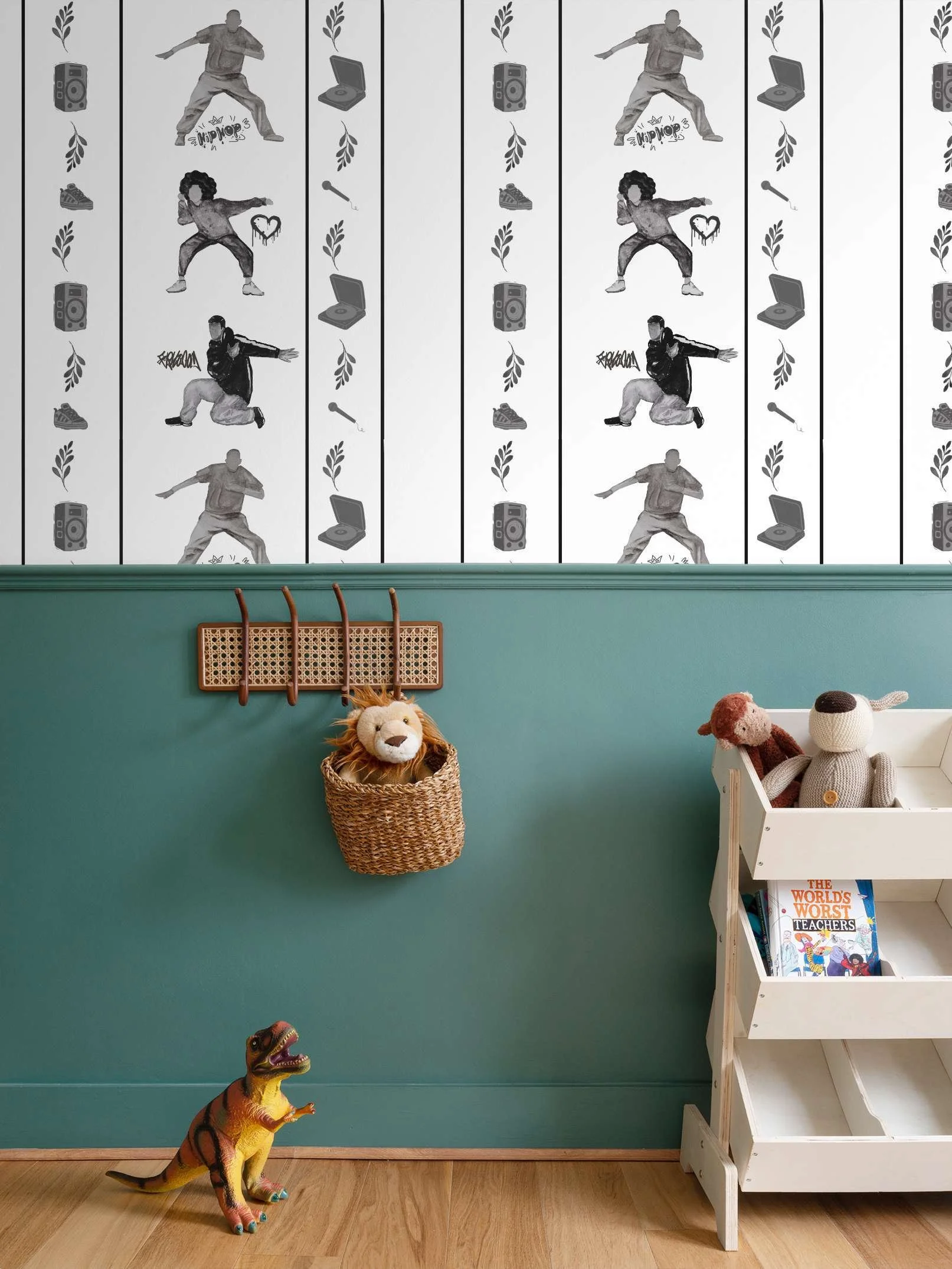
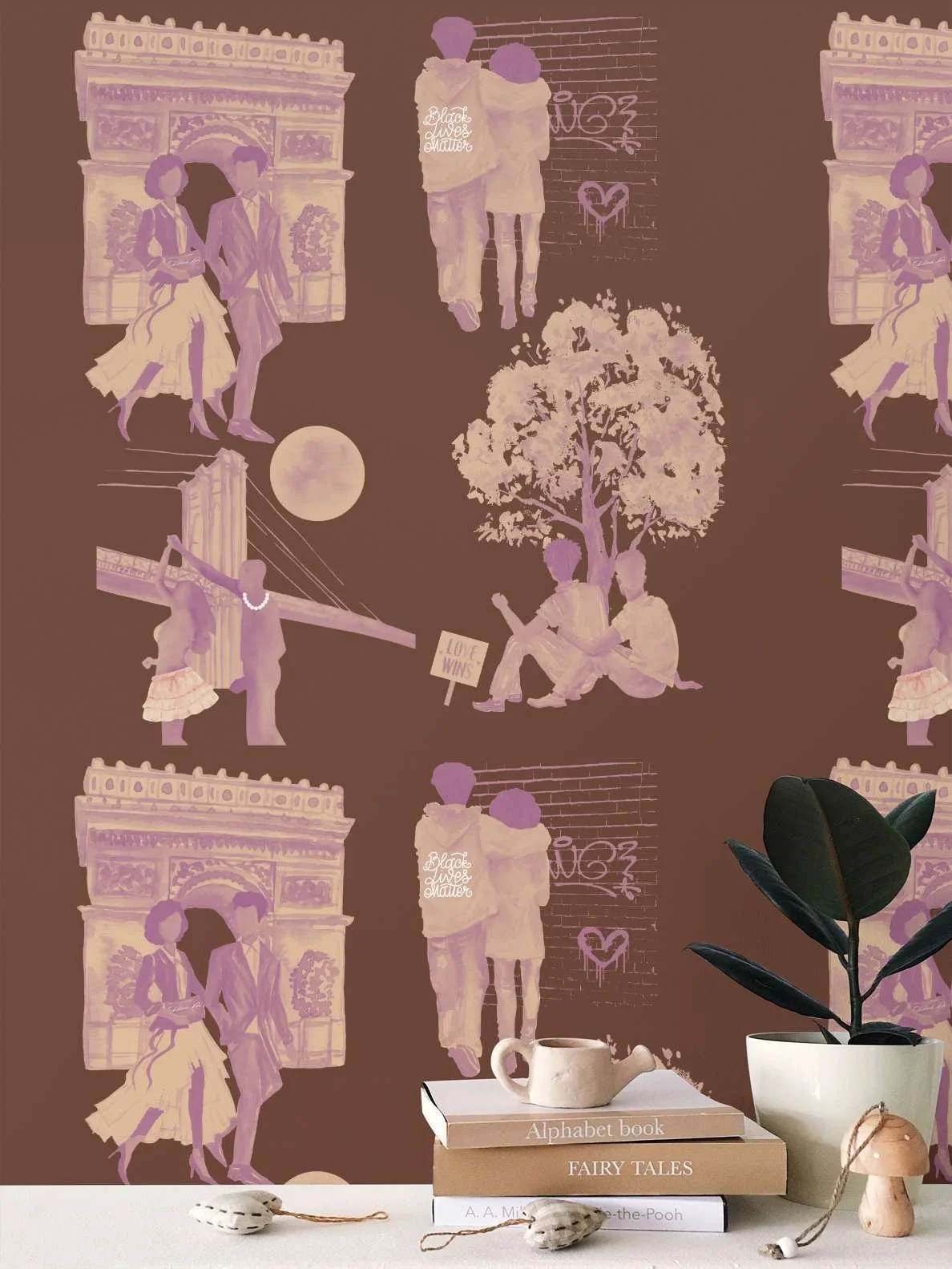
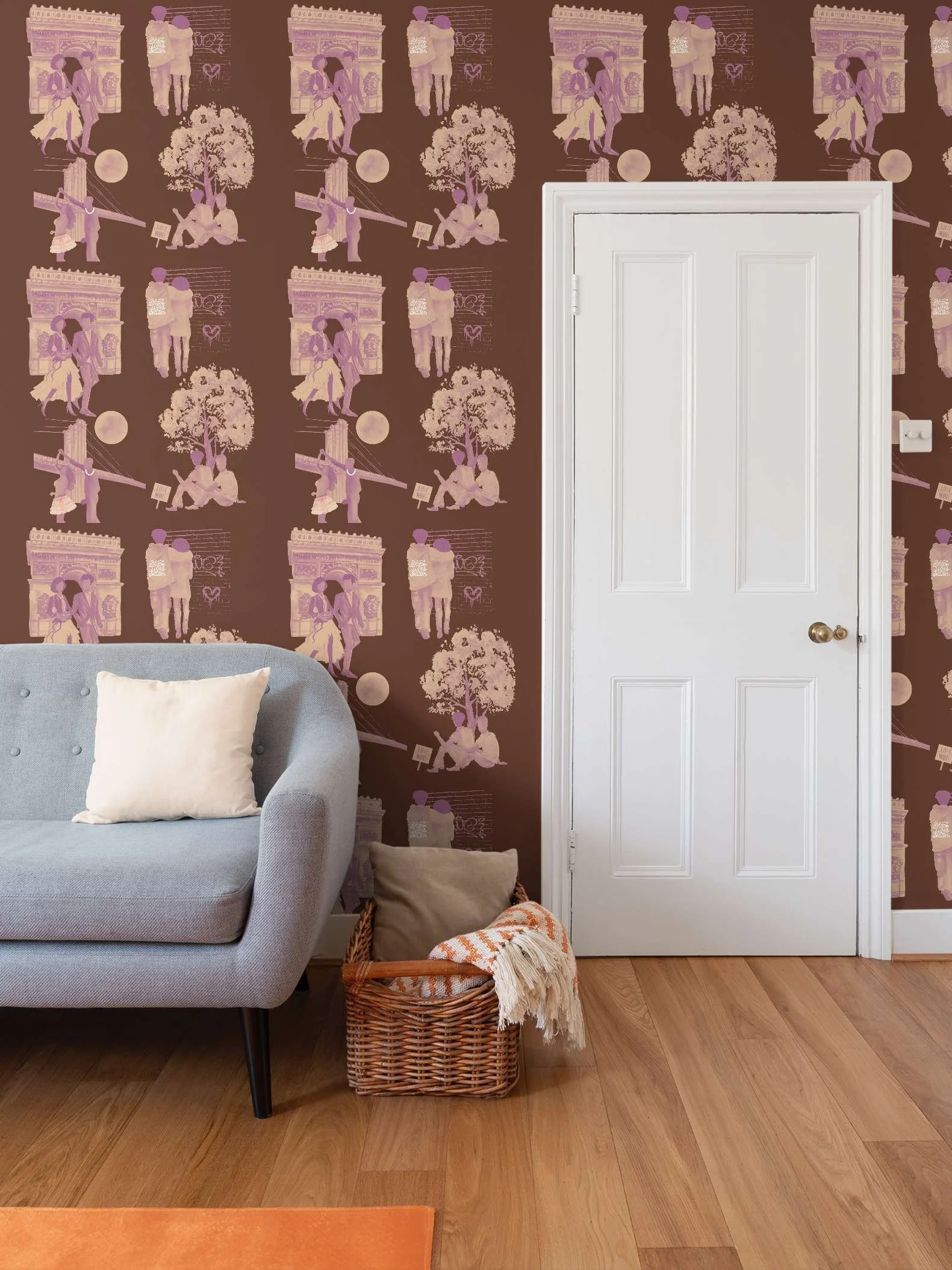
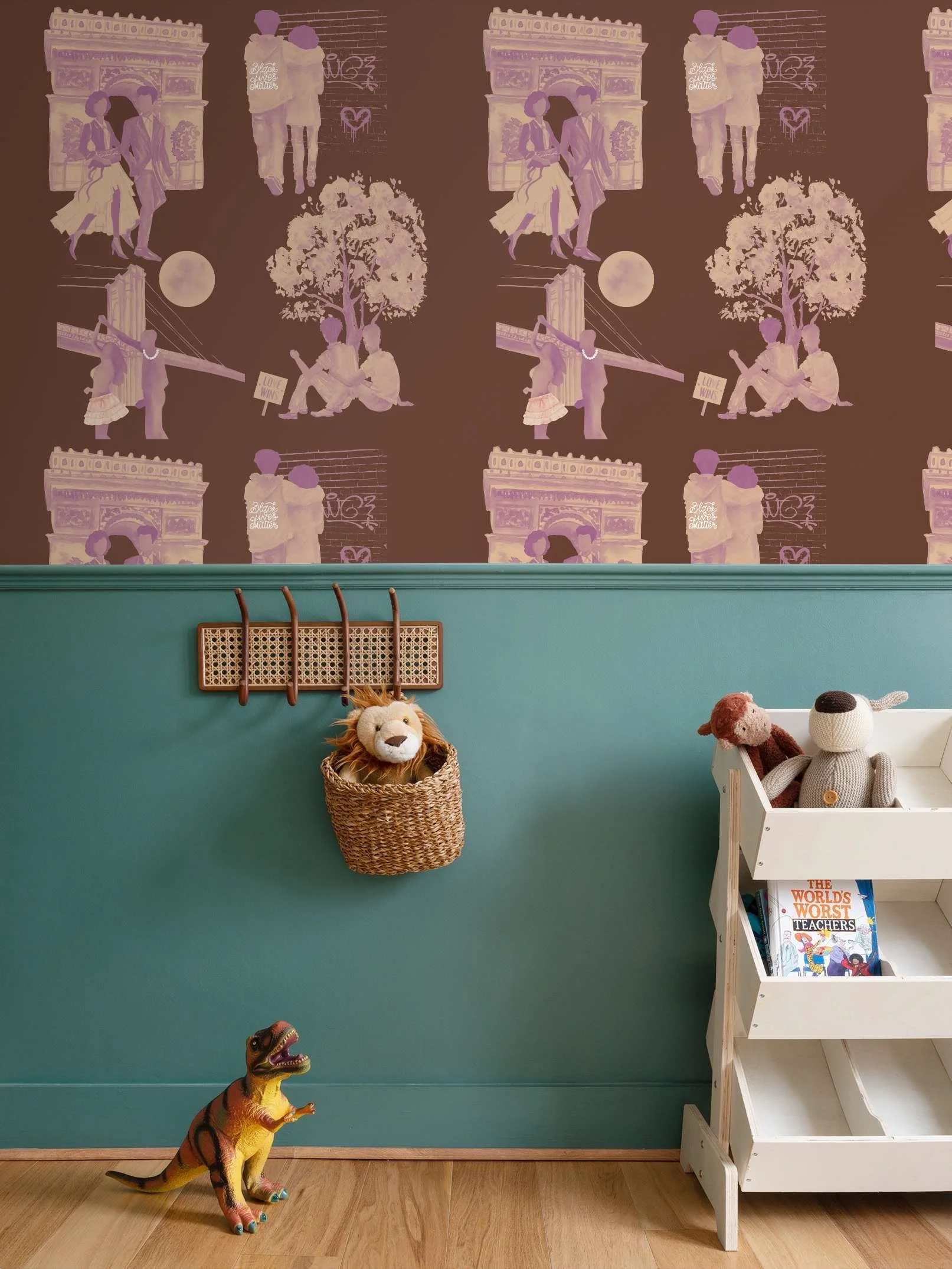
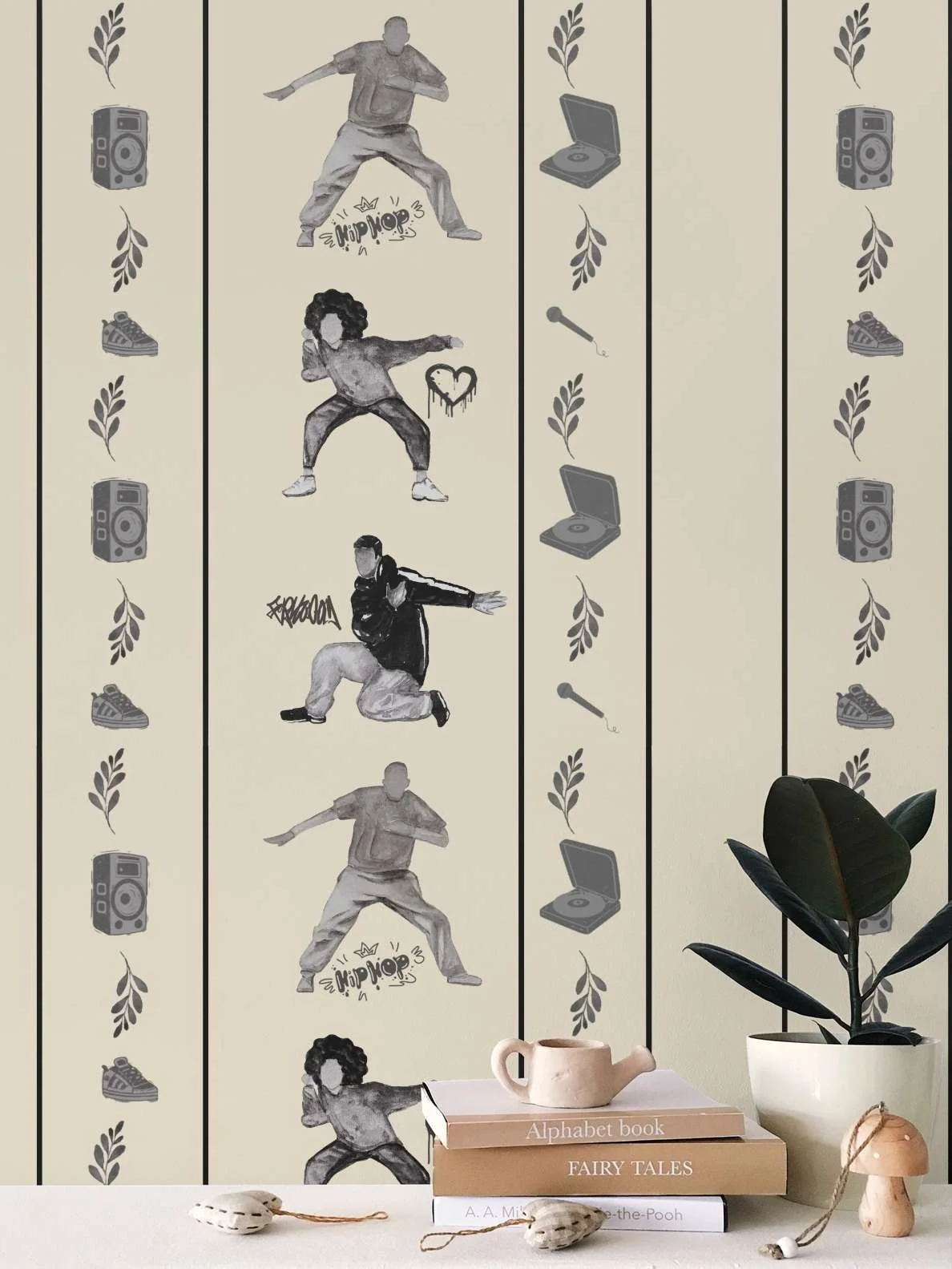
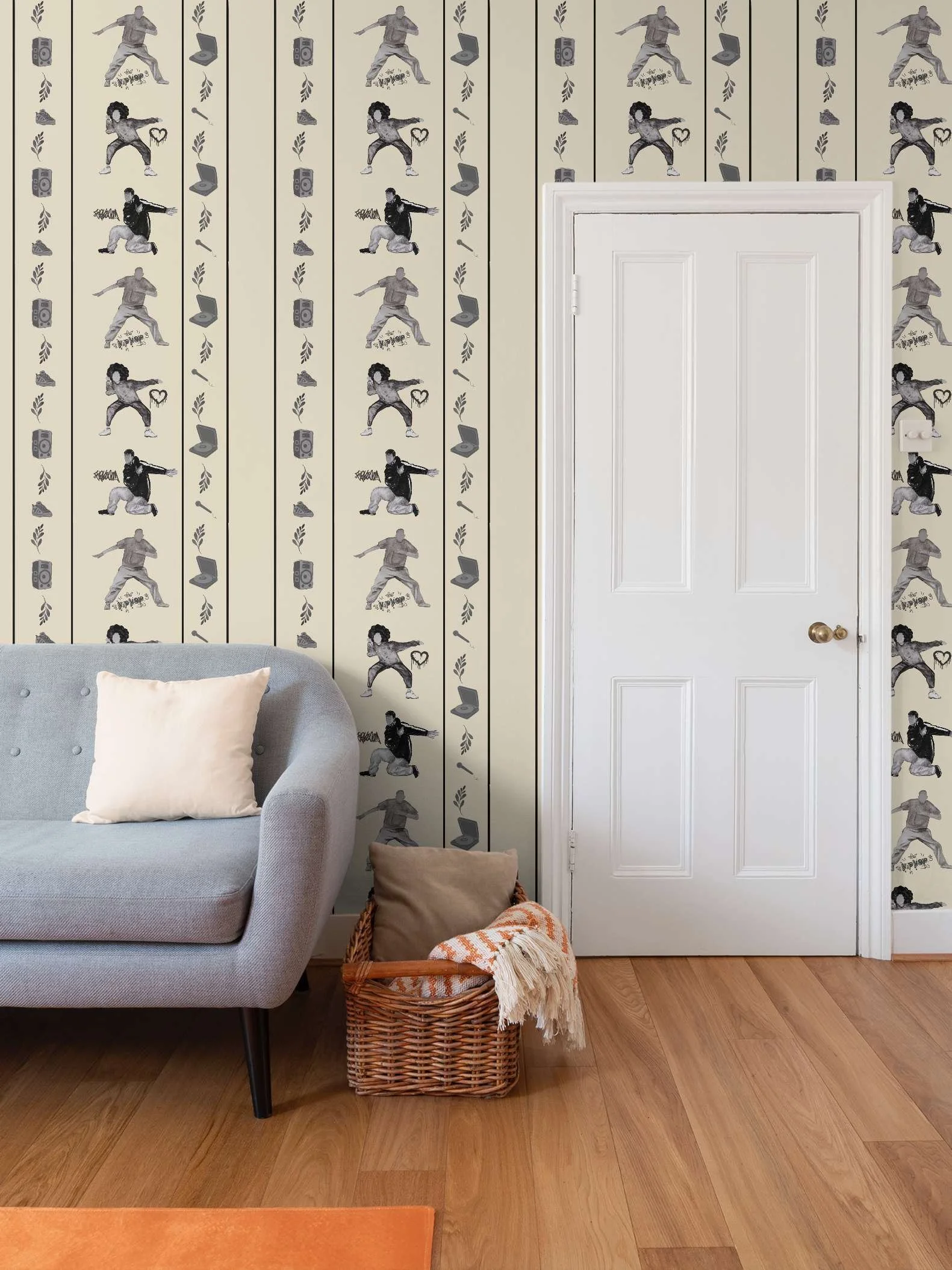
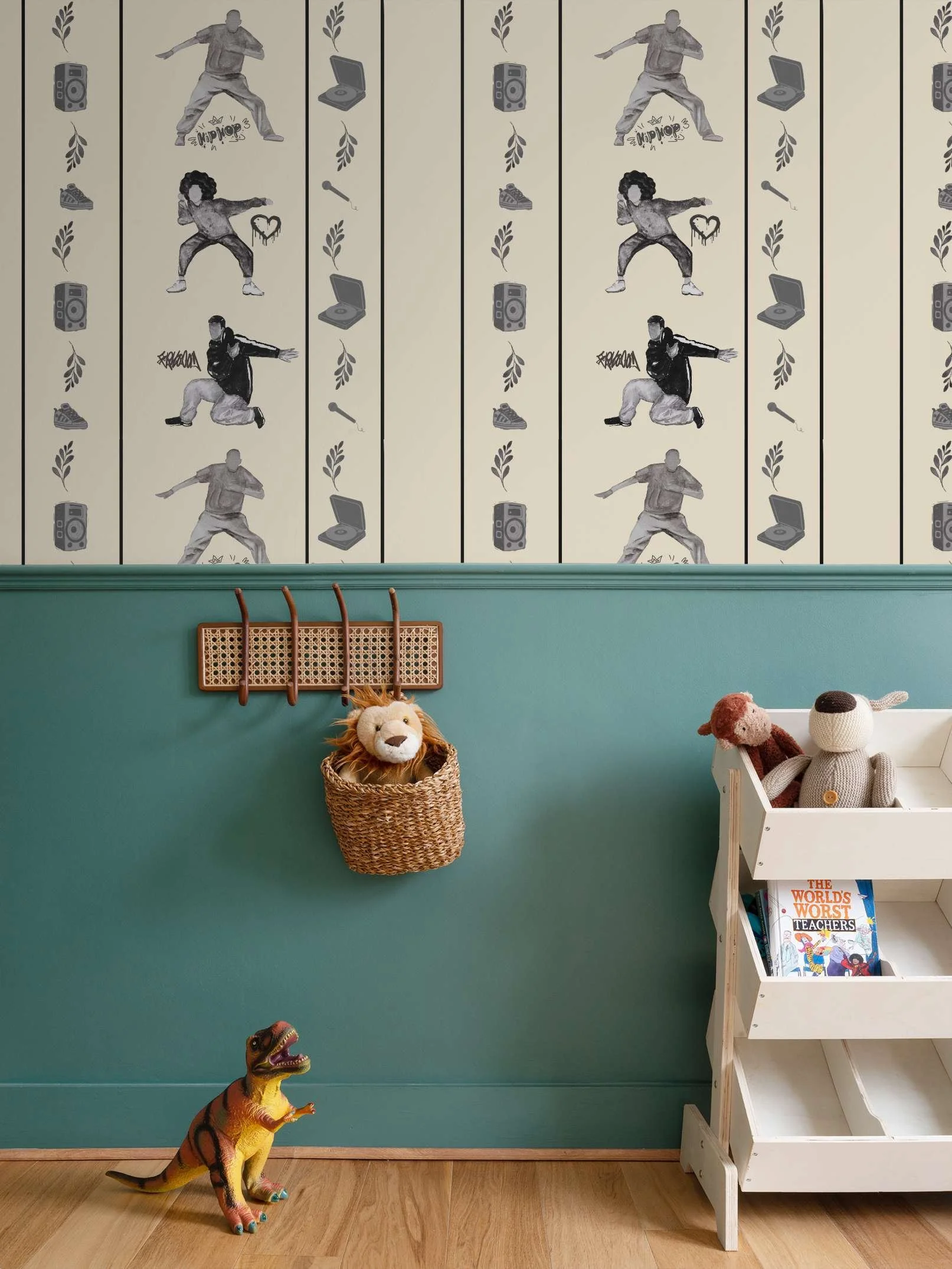
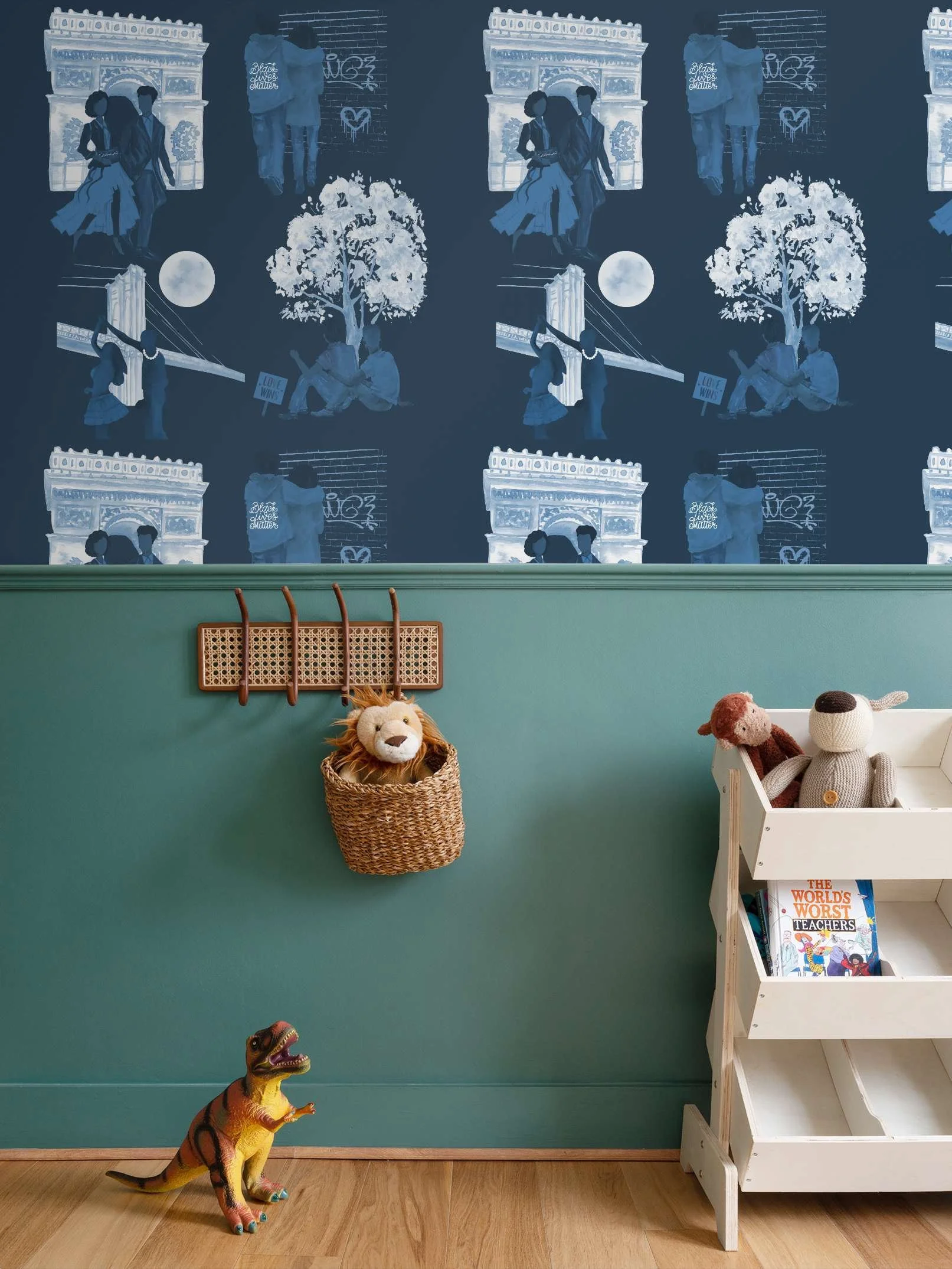
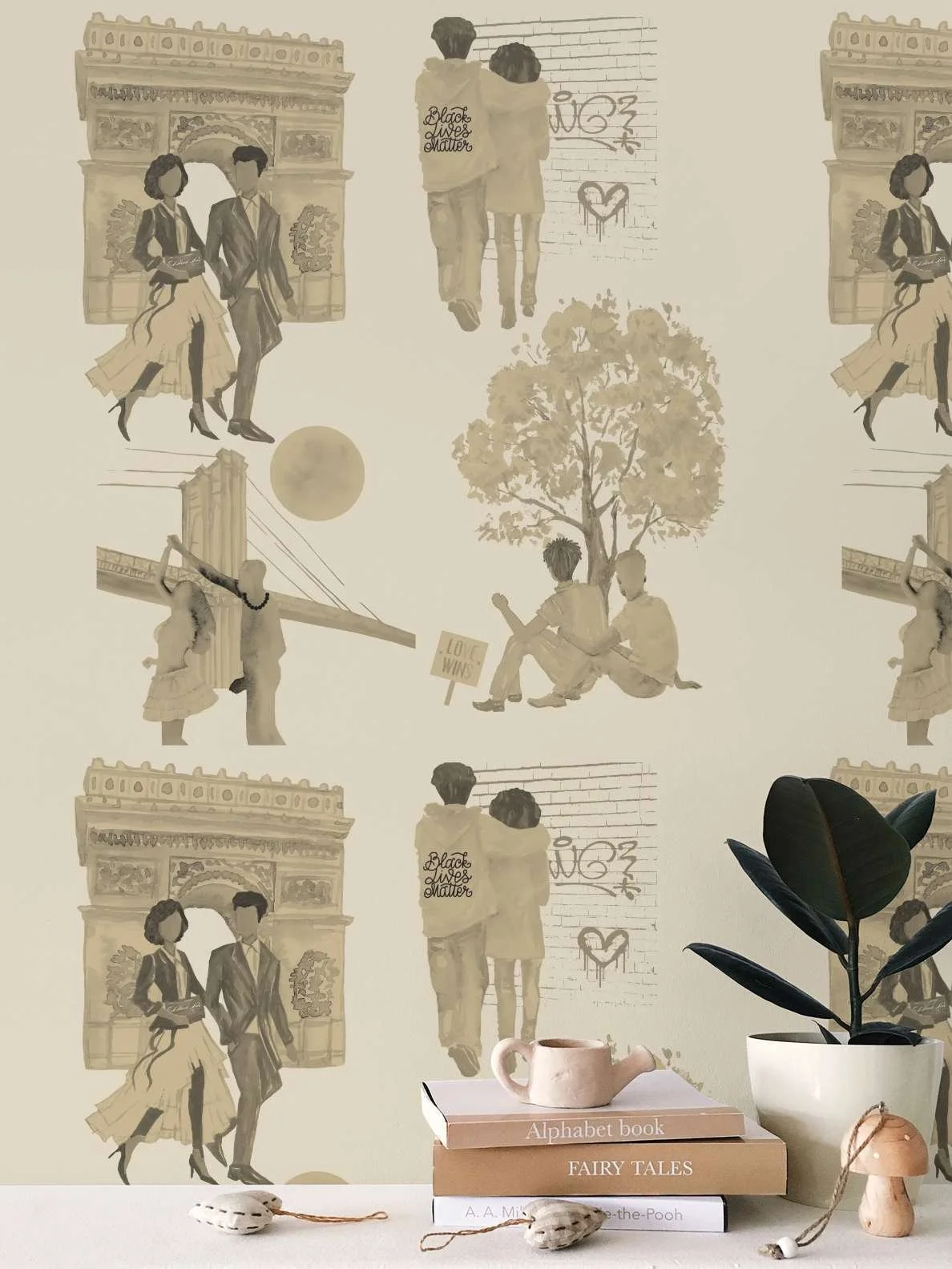
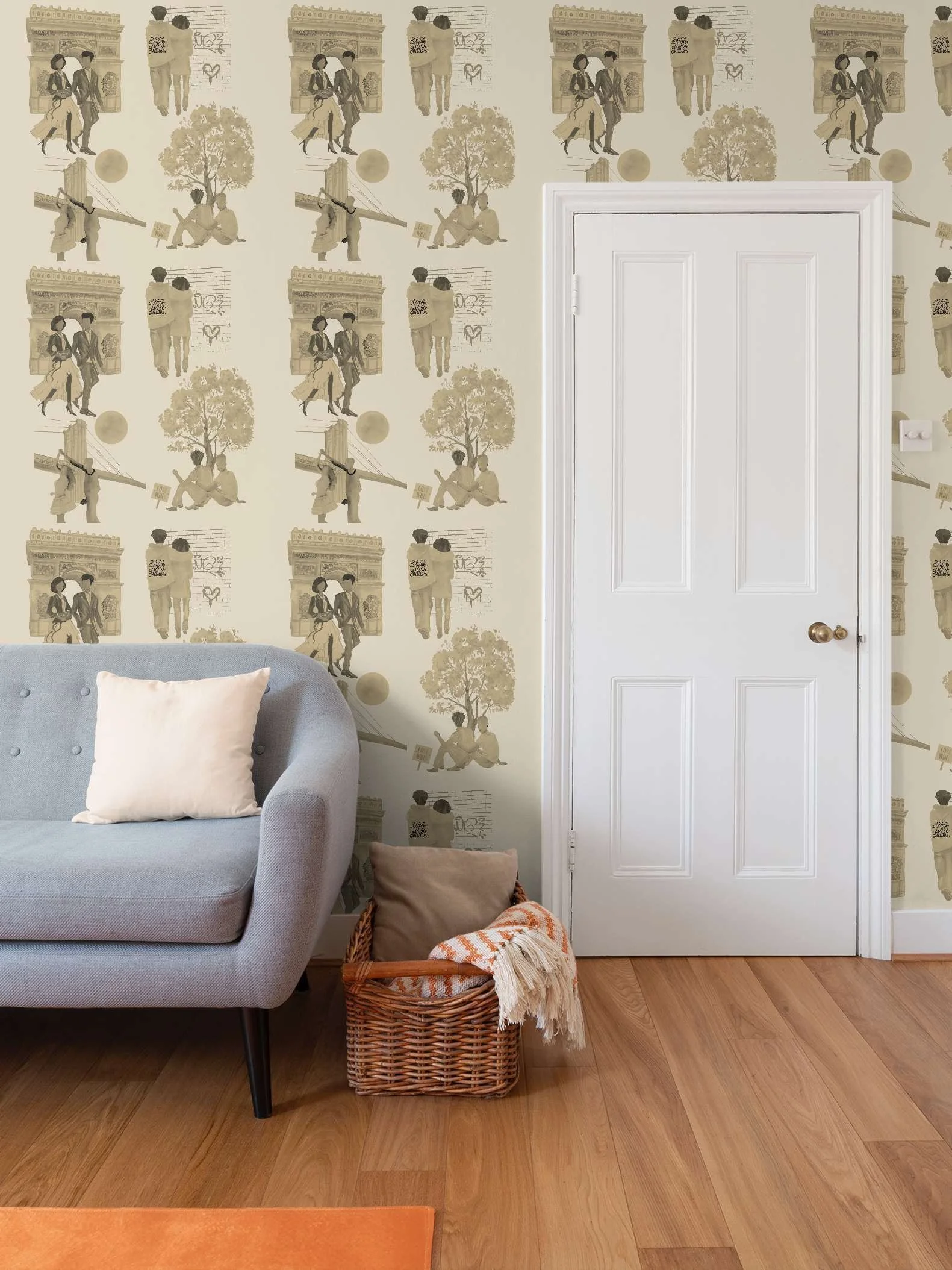
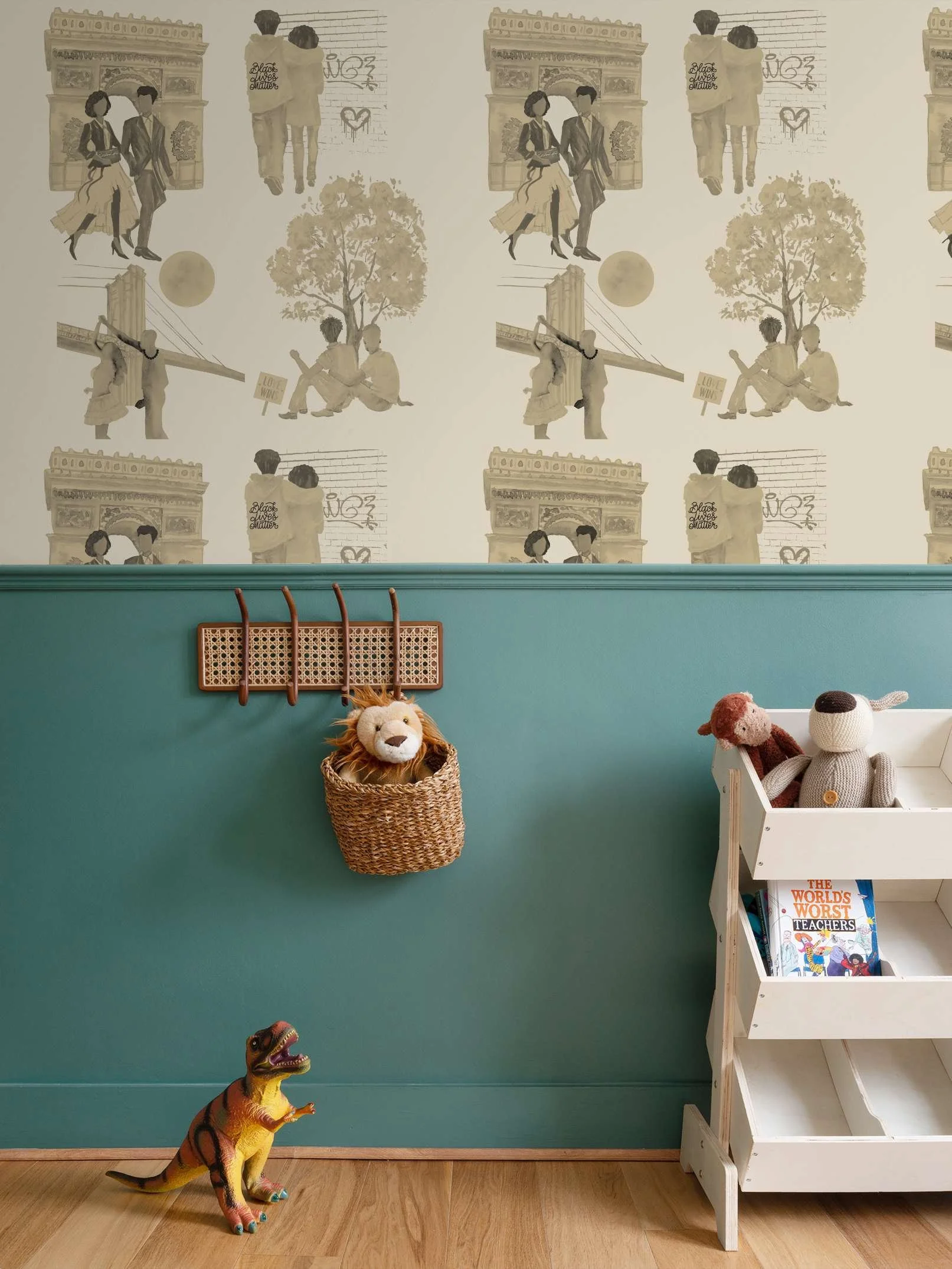
Whether you want to transform a feature wall or an entire room, our Glyph Ebony Wallpaper is the perfect way to add new layers to the aesthetic of your home. Bringing the ancient past and the present day together beautifully, this wallpaper is available in multiple substrates, from peel-and-stick to commercial grade or anti-microbial for health-focused interiors. The fun, eye-catching pattern, connecting modern Hip-Hop culture to the sacred script of ancient Egypt, is a cultural and aesthetic statement like no other, pairing a luxurious, ebony background with a warm earth tone design. Our wallpapers are PVC / VOC free, and fire rated in every substrate for a safe and fabulous addition to any room.
Editors' Note
The Glyph Collection draws parallels between the culture and symbolism of ancient Egypt and the iconography of modern Hip-Hop culture. Presenting meaningful totems of Hip-Hop — the microphone, the boombox, and the emcee — in the style of engraved hieroglyphs, the collection celebrates the many levels of meaning found in Hip-Hop —it’s lyrics, beats and dance — imagining the use of images of its common objects to convey those levels, from the mundane to the esoteric, just as the ancient Egyptians did. Hieroglyphics — the unmistakable writings of ancient Egypt — are one of a handful of writing systems in the world thought by scholars to have emerged entirely without outside influence. As such, they represent a wholly and uniquely Egyptian worldview. Consisting of pictographic logograms (characters depicting objects or concepts), phonograms (characters depicting sounds), determinatives (characters that clarify the meanings of other characters), and numericals (characters depicting numbers) this complex system of writing was known to include anywhere from 7-800 words for much of the Middle and New Kingdom periods, to as many as 8,000 words during the Ptolemaic period. The term hieroglyphic is not Egyptian, but derived from the Greek hieroglyphikos, meaning “sacred writing,” or more specifically, “sacred carving,” with hieros having the meaning of “sacred” and glyphein meaning “to carve”. Similarly, however, Egyptians referred to their writing system as Mdju Netjer, literally the, “Words of the gods,” reflecting the belief that writing was created and given to humanity by Thoth, the ibis-headed god of wisdom, science and magic. Constructed around 24 base phonograms, all representing consonants, Mdju Netjer, like Hebrew and Arabic, did not include written vowels in its script, preferring to use determinants to distinguish between words that might otherwise have been confused. Further, Egyptian script was extremely flexible in terms of writing direction, being able to be read left-to-right, right-to-left, top-to-bottom, or bottom-to-top. Usually carved into the stone facades of important buildings and statues, Egyptian hieroglyphics spawned cursive forms for everyday use, first Hieratic and later Demotic, that were written in ink. Despite their longevity, having been in continual use for more than 3,000 years, hieroglyphs eventually faded from use, their meanings lost to history until the 1799 discovery of the Rosetta Stone by French army officer, Pierre-François Bouchard, and its eventual translation, completed in the 1820s by French scholar, Jean-François Champollion.
Details
Whether you want to transform a feature wall or an entire room, our Glyph Ebony Wallpaper is the perfect way to add new layers to the aesthetic of your home. Bringing the ancient past and the present day together beautifully, this wallpaper is available in multiple substrates, from peel-and-stick to commercial grade or anti-microbial for health-focused interiors. The fun, eye-catching pattern, connecting modern Hip-Hop culture to the sacred script of ancient Egypt, is a cultural and aesthetic statement like no other, pairing a luxurious, ebony background with a warm earth tone design. Our wallpapers are PVC / VOC free, and fire rated in every substrate for a safe and fabulous addition to any room.
Editors' Note
The Glyph Collection draws parallels between the culture and symbolism of ancient Egypt and the iconography of modern Hip-Hop culture. Presenting meaningful totems of Hip-Hop — the microphone, the boombox, and the emcee — in the style of engraved hieroglyphs, the collection celebrates the many levels of meaning found in Hip-Hop —it’s lyrics, beats and dance — imagining the use of images of its common objects to convey those levels, from the mundane to the esoteric, just as the ancient Egyptians did. Hieroglyphics — the unmistakable writings of ancient Egypt — are one of a handful of writing systems in the world thought by scholars to have emerged entirely without outside influence. As such, they represent a wholly and uniquely Egyptian worldview. Consisting of pictographic logograms (characters depicting objects or concepts), phonograms (characters depicting sounds), determinatives (characters that clarify the meanings of other characters), and numericals (characters depicting numbers) this complex system of writing was known to include anywhere from 7-800 words for much of the Middle and New Kingdom periods, to as many as 8,000 words during the Ptolemaic period. The term hieroglyphic is not Egyptian, but derived from the Greek hieroglyphikos, meaning “sacred writing,” or more specifically, “sacred carving,” with hieros having the meaning of “sacred” and glyphein meaning “to carve”. Similarly, however, Egyptians referred to their writing system as Mdju Netjer, literally the, “Words of the gods,” reflecting the belief that writing was created and given to humanity by Thoth, the ibis-headed god of wisdom, science and magic. Constructed around 24 base phonograms, all representing consonants, Mdju Netjer, like Hebrew and Arabic, did not include written vowels in its script, preferring to use determinants to distinguish between words that might otherwise have been confused. Further, Egyptian script was extremely flexible in terms of writing direction, being able to be read left-to-right, right-to-left, top-to-bottom, or bottom-to-top. Usually carved into the stone facades of important buildings and statues, Egyptian hieroglyphics spawned cursive forms for everyday use, first Hieratic and later Demotic, that were written in ink. Despite their longevity, having been in continual use for more than 3,000 years, hieroglyphs eventually faded from use, their meanings lost to history until the 1799 discovery of the Rosetta Stone by French army officer, Pierre-François Bouchard, and its eventual translation, completed in the 1820s by French scholar, Jean-François Champollion.

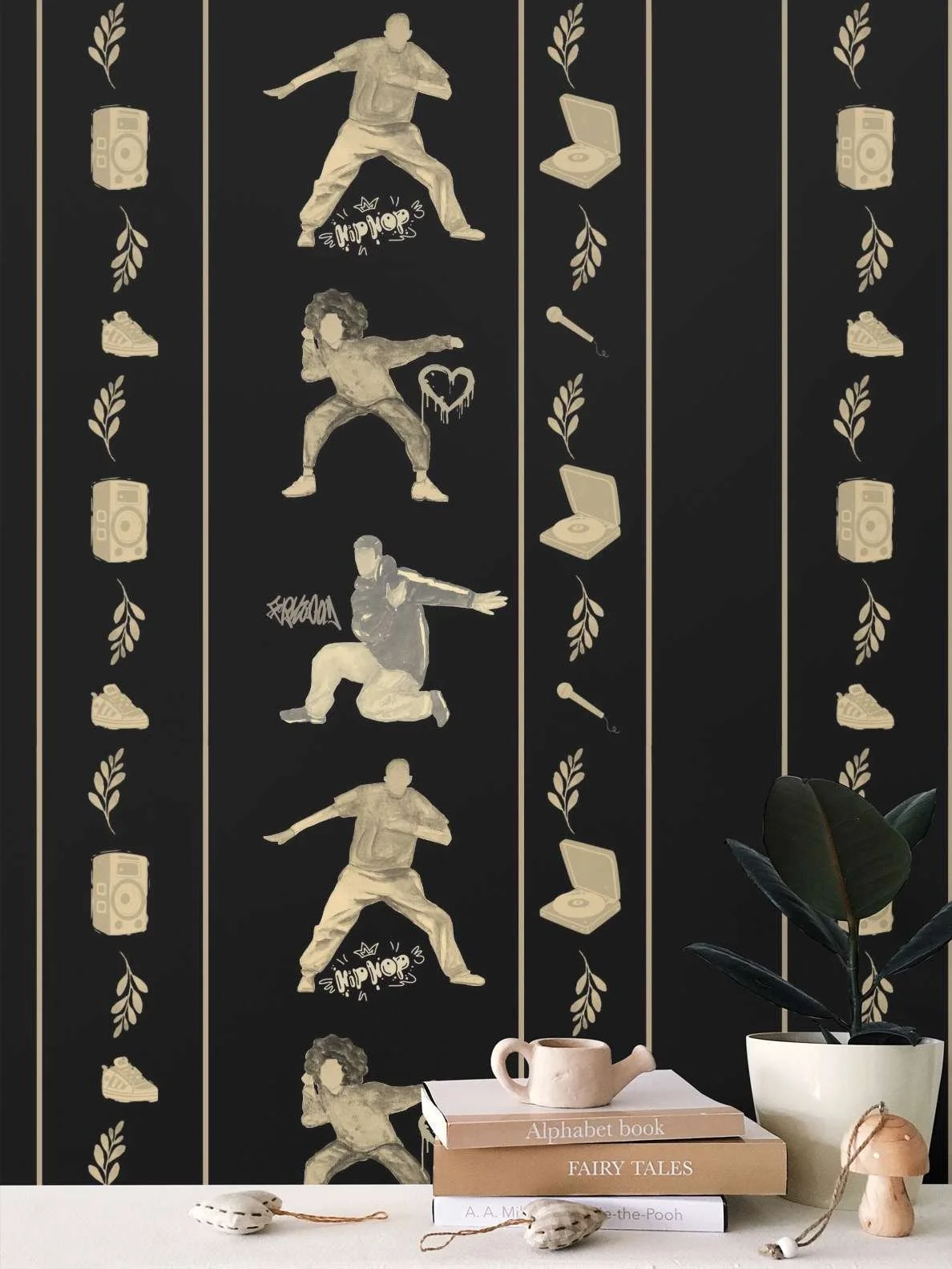 Image 1 of 3
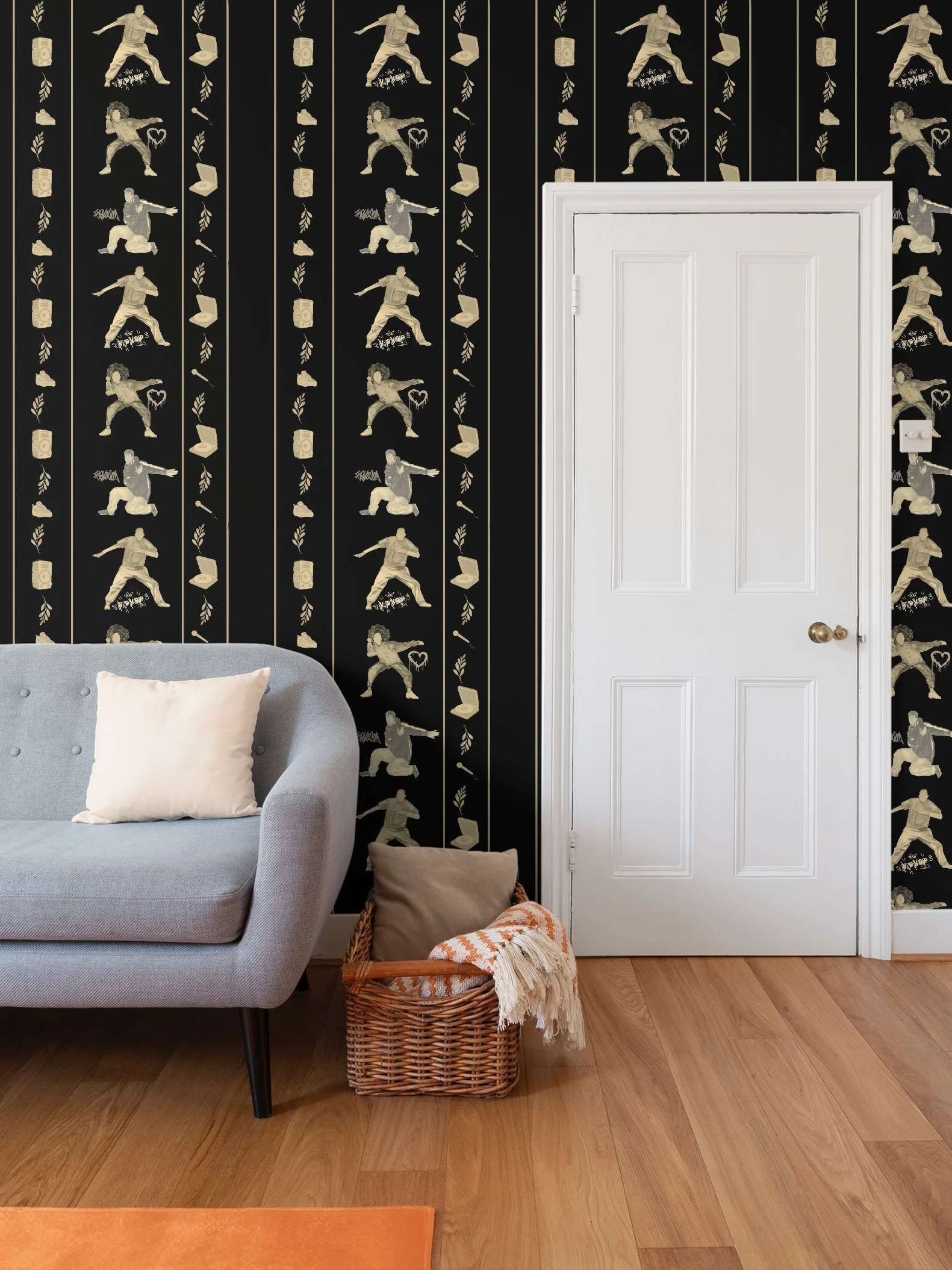 Image 2 of 3
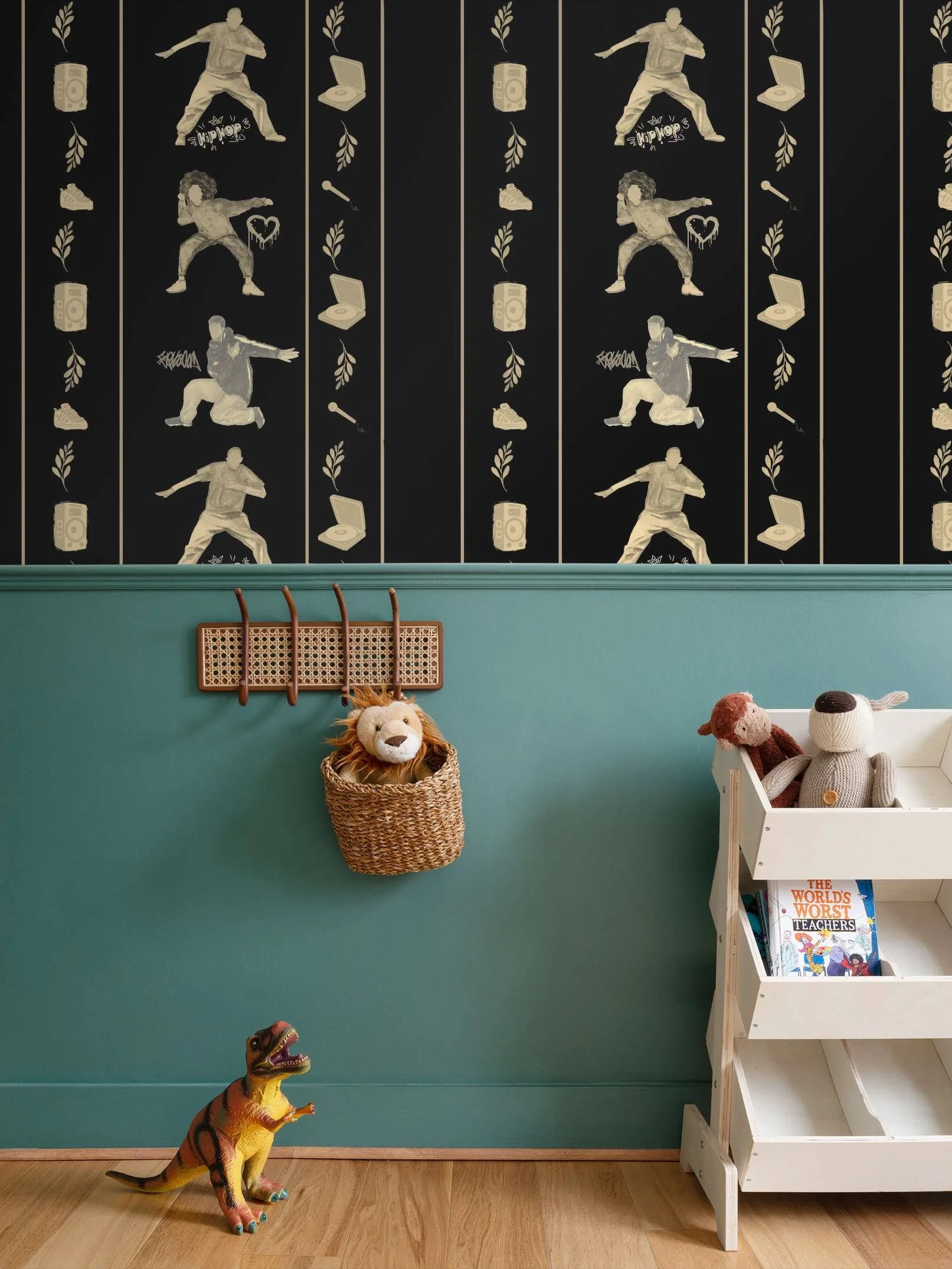 Image 3 of 3